Atrações
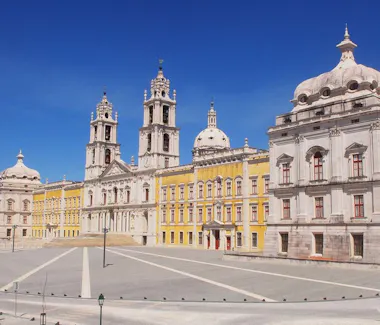
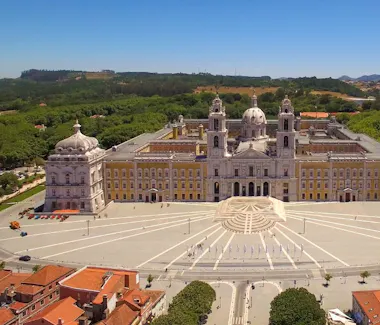
Palácio Nacional de Mafra, Terreiro Dom João V, Mafra, Portugal
Royal Building of Mafra – Palace, Basilica, Convent, Cerco Garden and Hunting Park (Tapada)
Located in Mafra just 5 min from Casas da Tia Alice, the property was conceived by King João V in 1711 as a tangible representation of his conception of the monarchy and the State.
This imposing quadrangular building houses the king’s and queen's palaces, the royal chapel, shaped like a Roman baroque basilica, a Franciscan monastery and a library containing 36,000 volumes.
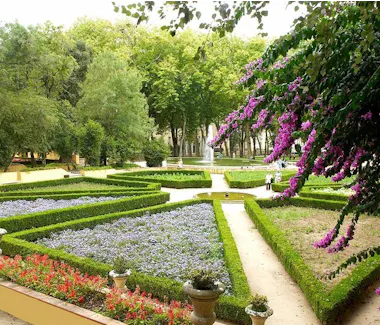
The complex is completed by the Cerco garden, with its geometric layout, and the royal hunting park (Tapada). The Royal Mafra Building is one of the most remarkable works undertaken by King João V, which illustrates the power and reach of the Portuguese Empire. João V adopted Roman and Italian baroque architectural and artistic models and commissioned works of art that make Mafra an exceptional example of Italian Baroque.
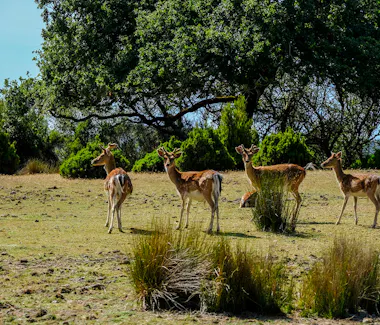
Tapada Nacional de Mafra, Mafra, Portugal
Mafra's National Natural Reserve
Created during the reign of King João V, after the construction of the Convent of Mafra, as a leisure park for the King and his court, the Tapada Nacional de Mafra is a representative forest and natural environment designed next to thetown's main monument.
It covers 819 hectares, entirely protected by a historic 21-kilometre wall, in an area almost entirely covered by a green mantle where wild animal populations coexist in freedom. In addition, there is a wide variety of flora within the Tapada's perimeter.
The flora of the Tapada de Mafra, which has changed over time, includes species such as cork oak, stone pine and different varieties of oak, as well as many types of shrubs. At least three specimens have been classified as Trees of Public Interest: a horse chestnut tree; an olaia tree approximately 120 years old; and a cork oak tree around 300 years old.
As for fauna, birds are among the most representative groups in the Tapada Nacional de Mafra. We can find specimens of Bonelli's eagle, eagle owl, goshawk and short-toed eagle, in addition to smaller species. In the areas near the streams, we find salamanders, frogs, turtles and various species of snakes. As for mammals, there are, among others, fallow deer, red deer, wild boars, badgers and foxes.
It has been a UNESCO World Heritage Site since 2019.